

As Indian law firms establish a presence beyond domestic borders, their overseas offices tell a larger story about India’s commercial ambitions, its evolving legal profession, and its place in the world.
An address on Wall Street, a corner office in Singapore, or a nameplate in Mayfair carries its own quiet assurance. It’s a way of showing you’ve made it, without needing to spell it out. For Indian law firms, opening offices in these places has become more than just a business move it’s a signal of their growing reach, a bridge to new markets, and a sign of just how much the Indian legal profession has evolved
While leafing through Dr. D.Y. Chandrachud’s Why Constitution Matters a book that, like all good law, is as much about uncertainty as about answers one stumbles upon a larger truth: law is less a doctrine than a conversation, a negotiation across generations and geographies. Today, the conversation has decamped from Delhi’s courtrooms to the skyscrapers of Singapore and the lunch tables of London.
For decades, Indian lawyers read the world through the narrow slits of domestic statutes and local courts. Suddenly, they find themselves clutching passports, not just precedents, as their clients pursue acquisitions in unfamiliar time zones, negotiate contracts over midnight calls, and scatter family fortunes across continents. The old certainties one country, one regulator have given way to a patchwork of jurisdictions, each with its own arcane rituals and regulatory quirks. The world, in short, has become gloriously messy. Someone has to make sense of it all. Increasingly, that someone is an Indian law firm with an international address.
The passport, not just the pedigree
For decades, the standing of a law firm was measured by the familiar markers: institutional memory, prominent clients, significant transactions and the reassuring weight of a name that had survived several economic cycles. Those measures still matter. But as India’s commercial relationships become more geographically dispersed, another question has entered the conversation: can a firm take its expertise beyond its home jurisdiction and remain useful when the rules change at the border?
The overseas office is not just a dot on a map or a line on a business card. Done right, it’s a listening post a vantage from which to eavesdrop on the markets, investors, and intrigues that clients now call home. Ashish Razdan, Partner, Khaitan & Co., puts it plainly: Indian businesses are acquiring, raising, partnering, and expanding. Their legal needs have grown more baroque, requiring lawyers to juggle not just statutes, but time zones and temperaments. In this new world, proximity isn’t just convenience; it’s competitive advantage. The address matters, but only if it means you’re close enough to catch the whispered deal before it’s announced.
Take Nishith Desai Associates, for instance a firm with a research habit and offices sprinkled from Silicon Valley to Singapore. They do not merely translate law; they interpret intent, fusing legal, regulatory, and tax advice into a single, cosmopolitan dialect. To practice across borders, they suggest, is less about speaking two legal languages and more about intuiting the business impulse that brings the parties together in the first place.
Khaitan & Co., meanwhile, has established a Singapore office focused on Indian-law advice for international transactions, investments, private-client matters and international arbitration. Singapore’s role as a meeting point for Asian capital makes it a natural vantage point from which to advise clients whose commercial interests extend into India. The office places Indian legal expertise closer to the negotiations that may eventually require it.
Razdan is quick to note: the point is not to collect addresses like stamps. The real value lies in making sure the firm’s wisdom travels home again, cross-pollinating ideas and smoothing the rough edges between jurisdictions. The deal may be global, but the question that decides it the one that keeps everyone up at night may still be distinctly, stubbornly Indian.
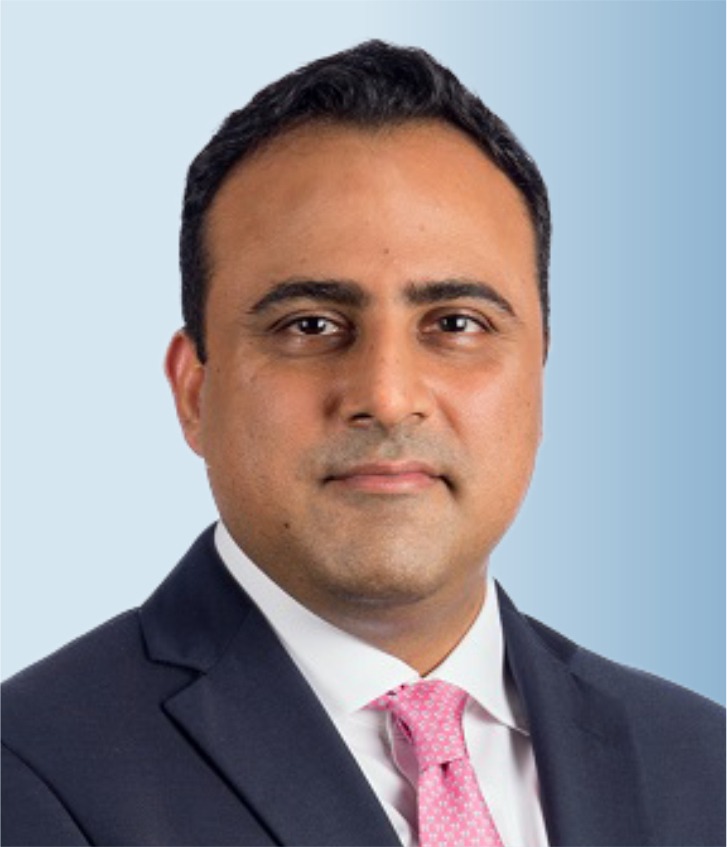
"Having an office abroad is not the objective by itself; its value is in the way it enhances the firm's abilities in India and allows us to give continuous, commercially sound advice across different jurisdictions, working with reliable local counsel as and where needed.” Ashish Razdan, Partner, Khaitan & Co.
The geography of opportunity
Not every international office serves the same purpose. Some are designed around investment flows; others around particular industries, client communities or regional markets. The interesting part is not how many flags a firm can plant, but what it intends to do once it arrives.
Kochhar & Co. offers a North American example. Its Toronto office, operating as Kochhar & Co. Associates Inc., advises Canadian businesses on Indian law, particularly in technology, banking and intellectual property, while also supporting the firm’s oil and gas practice as seen in its office in Dubai. Its Chicago office provides another point of contact for North American clients and Indian businesses seeking to establish a presence in the United States. The arrangement makes geography work as a practical advantage: proximity, local context and a channel into the Indian market.
At Cyril Amarchand Mangaldas, the international footprint extends to Singapore and Abu Dhabi. The Singapore office opened in early 2021, followed by Abu Dhabi in the summer of 2024. Rishabh Shroff, Partner, Co-Head of Private Client and Head of International Business Development at CAM, says the rationale was straightforward: to be physically present where Indian clients were investing and doing business. As India’s outbound investment has grown, the firm saw value in having a familiar name and team in two important investment centres. The offices were a natural extension of relationships and work already established in those markets. The Singapore practice advises on Indian law and international arbitration, while CAM Middle East operates from the Abu Dhabi Global Market and serves clients across the wider region. Energy, mergers and acquisitions, investment funds, arbitration and financial services sit among its areas of focus. Together, the offices reflect the increasingly important commercial corridor connecting India with Southeast Asian and Middle Eastern markets.
Then there is Singhania & Co., with its London office serving as an overseas hub for non-resident Indians and businesses navigating the India–UK relationship. Its Dubai team adds a regional dimension through corporate advisory and environmental, social and governance work. Here, the international practice is not confined to large corporate transactions. It also speaks to the movement of people, family interests and businesses across jurisdictions.
For CAM, the overseas offices are also a platform for regional work. Shroff notes that the Abu Dhabi team is involved in cross-border matters extending into neighbouring GCC countries, while the Singapore office’s reach includes markets such as Vietnam and Malaysia. The firm’s proposition combines its established Indian client base and domestic expertise with teams selected and trained to understand the local market, alongside collaboration with foreign law firms on local law and compliance. The model is not to replace local counsel, but to bring the pieces together. Five firms, several geographies, and no single template for international ambition.

"With the huge rise in India’s outbound investment over the last few years, we saw the importance of having a familiar name and team in these two key investment centres, servicing our Indian clients on their outbound ambitions" Rishabh Shroff, Partner, Co-Head, Private Client and Head, International Business Development, Cyril Amarchand Mangaldas
An address is not a licence
Prestige invites a lazy assumption: that a foreign office is a foreign practice. It is not.
Singapore’s regulatory framework distinguishes between foreign and domestic law practices. A Foreign Law Practice may advise on foreign law, including Indian law, while its ability to undertake Singapore-law work is restricted and depends on the applicable licensing and registration framework.
The Advocates Act governs legal practice in India; beyond its borders, the host jurisdiction’s rules determine who may practise and on what terms.
India has its own regulatory framework. The Bar Council of India’s Rules for Registration and Regulation of Foreign Lawyers and Foreign Law Firms in India, 2022, notified in 2023 and amended in May 2025, permit specified non-litigious practice involving foreign and international law, subject to registration, reciprocity and other prescribed conditions. They do not authorise unrestricted practice of Indian law or litigation by foreign lawyers and firms.
The principle is symmetrical: you may bring your law; you may not borrow ours.
So what travels is Indian law, advised abroad. That is narrower than “international practice”. It is also more honest.
“ The law packs its bag ”

Return, for a moment, to Chandrachud’s notion of conversation. Law has always been a dialogue across generations; now it must learn the trickier art of dialogue across borders, where the other party is armed with its own statutes, its own regulators, and a bracingly different sense of humor.
An international address signals ambition, but on its own, it doesn’t guarantee relevance.That sort of credibility is built gradually by being the law firm a Singapore-based fund reaches out to when Indian regulations get complicated, or the one an Abu Dhabi client relies on to explain Indian realities clearly and directly
Shroff points to major outbound deals, such as Sun Pharma’s partnership with Organon and Essar’s planned US steel investment, as evidence of where things are headed. As Indian companies take on larger and more complex ventures overseas, the real advantage lies in a firm’s ability to manage transactions across jurisdictions.
Increasingly, international offices are not just about providing Indian legal advice they’re about becoming strategic partners who understand the client’s business goals, regulatory hurdles, and the broader geopolitical climate. As Razdan notes, this broader perspective is no longer optional; it’s become essential as Indian investment abroad and foreign capital coming into India both continue to grow.
Methodology
We looked at Indian law firms with an established international presence, examining where they have ventured, the practices they have built, and the connections they have forged between India and global markets. The focus was not on how far a firm’s name could travel, but on what its presence abroad reveals about the changing ambitions of Indian legal practice.
Some represent established bridges between Indian businesses and foreign markets. Others reflect the growing complexity of cross-border transactions, investments and disputes. Each offers a different perspective on a profession learning to operate beyond its familiar jurisdictions.
The selection draws on publicly available information, firm websites and legal directories. It is not a ranking, nor an assessment of which firm has travelled furthest.
And perhaps that is the point of this Registry. Not merely to document where Indian law firms have arrived, but to understand what their journeys tell us about where Indian law is going.