
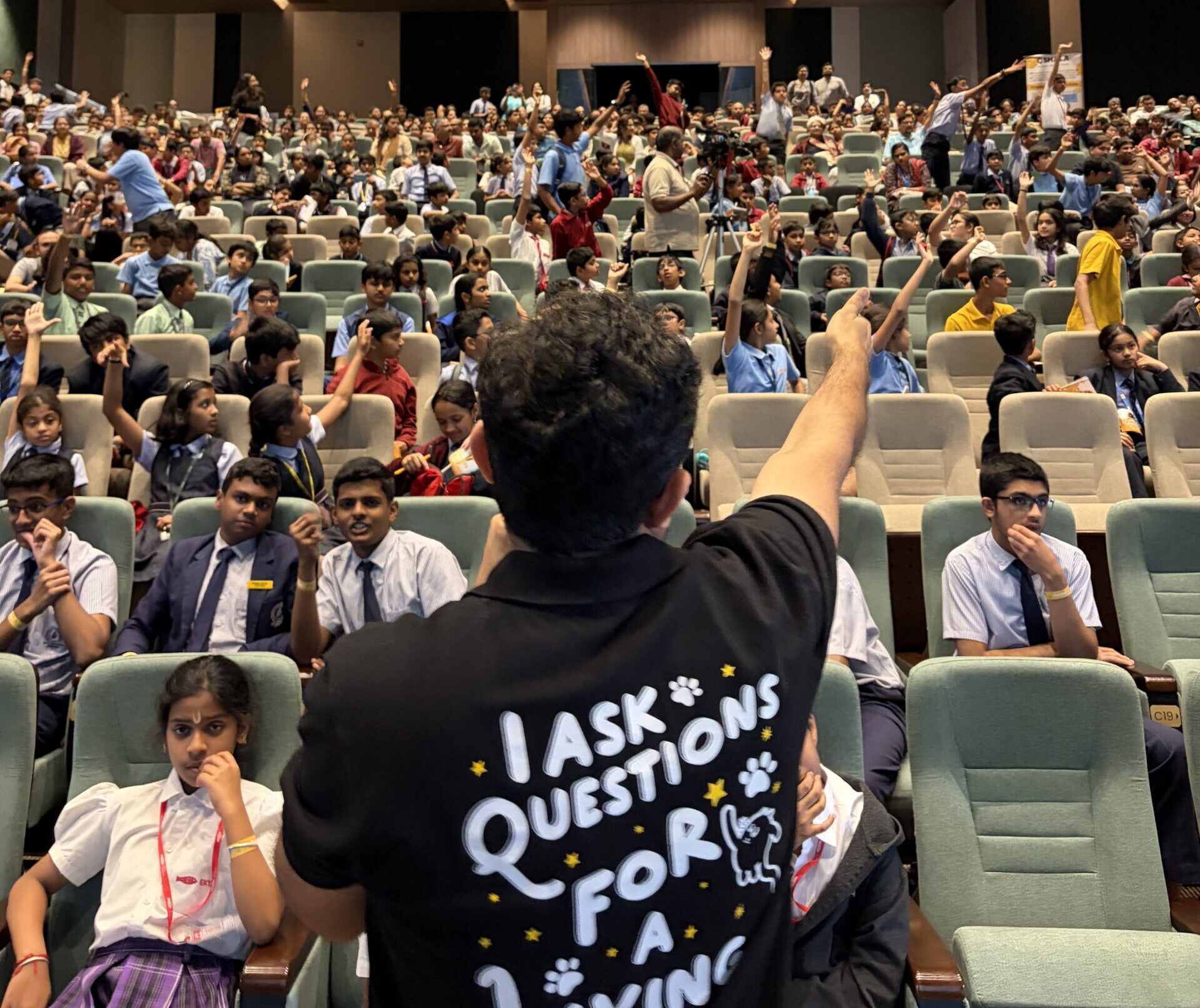
THE GREAT CAREER DETOUR
You went to law school, presumably to practice law. At what point did asking questions become more interesting than answering legal ones?
Sachin: We’d both been quizzers through school and college. Somewhere midway through law school, we began wondering whether the shift from answering quiz questions to asking them could be a career. We enjoyed the law, too. But the joy of quizzing just kept winning our attention.
Raghav: Teaching in local schools was a turning point. We were being paid to help children ask questions and discover quizzing. That made us think: could we take what quizzing had given us to more people, and make a living doing it?
Was starting QShala a carefully considered career move or an elaborate escape from the legal profession?
Sachin: Considered, yes. Exhaustively considered, no. Had we thought through every possible problem, we might never have started. We liked our legal careers; we just wanted more. Back then, starting up also involved passing a tough preliminary round: convincing our parents. So, we came up with the plan required to convince them, but were we thinking 10, 20 years down the line? Not really.
Raghav: I would have considered teaching law and attempting civil services. But people had been telling me since school that I could become a quizmaster, and truthfully, that’s what made me happiest. So, the inner and outer voice combined with us winning the national Tata Crucible championship together, with about ₹4 lakh in prize money, made that possibility feel real. We decided to give it a real chance.
Do you ever miss the courtroom, or is a particularly vicious quiz round a decent substitute?
Sachin: I never practised in court, so I can hardly claim to miss it. I know the quiz stage much better. On the quizzing stage, there is drama, there are arguments, but the stakes are thankfully rather different.
Raghav: I clerked with Justice S. Muralidhar and interned with Senior Advocate Krishnan Venugopal. Watching advocates argue was wonderful; waiting for a matter to be heard was less thrilling. But in a quiz, that moment someone cracks a question, and the room erupts in applause gives me a compelling sense of euphoria.
THE LAWYER'S MIND
Lawyers are trained to question everything. Is that a professional hazard or a useful life skill?
Sachin: Useful, until you need complete certainty before doing anything. Law trains you to be thorough; entrepreneurship frequently demands that you act on incomplete information. I’ve had to unlearn the instinct to have every answer before making a move.
Raghav: A lawyer learns to spot risk; an entrepreneur must learn to live with it. But asking questions remains valuable in both worlds. “What’s the real story?” and “Have I really understood this?” are both useful questions, whether you’re reading a contract or listening to another person.
Does your legal training make you better quizmasters, or does it just make you exceptionally good at challenging the answer key?
Raghav: A little of both. You learn to present facts and understand whom you’re speaking to. That matters when building a question bank and presenting that quiz to different audiences. And does my team occasionally find me cross-examining our own answer key? Absolutely.
If a lawyer contests a quiz answer, do you give them a hearing or simply throw them out?
Raghav: A hearing, certainly. We should be able to explain an answer and have the humility to correct it if we’re wrong. Being the quizmaster doesn’t mean knowing everything.
Sachin: Happy to hear the objection, provided it doesn’t derail the entire quiz. The quizmaster still makes the final call. We’ve never had to throw anyone out, and I’d like to keep that record intact.

Raghav & Sachin winning the 2012 National Tata Crucible championship together.
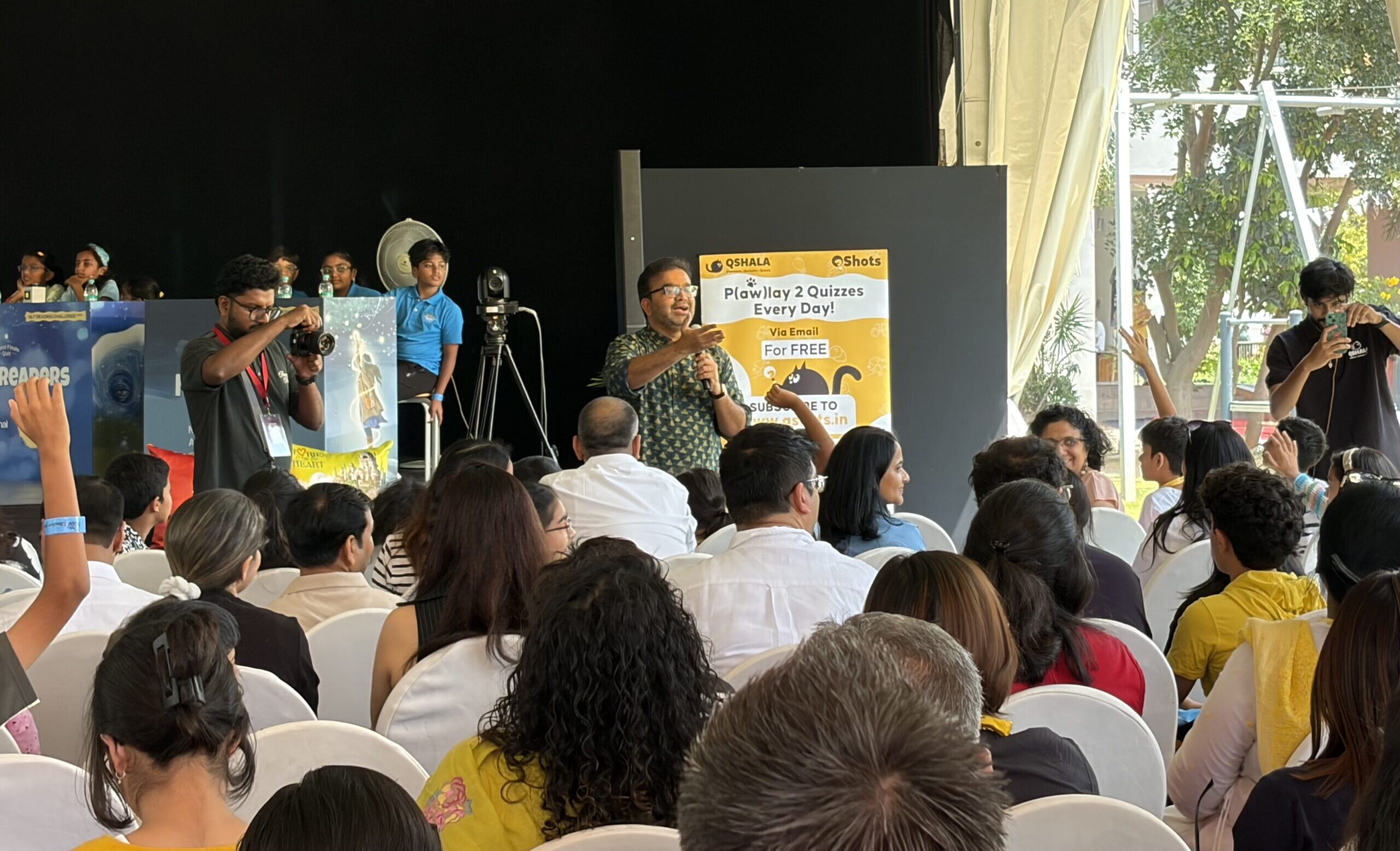
Sachin as a Quiz Master at the NEEV Literature Festival, 2026
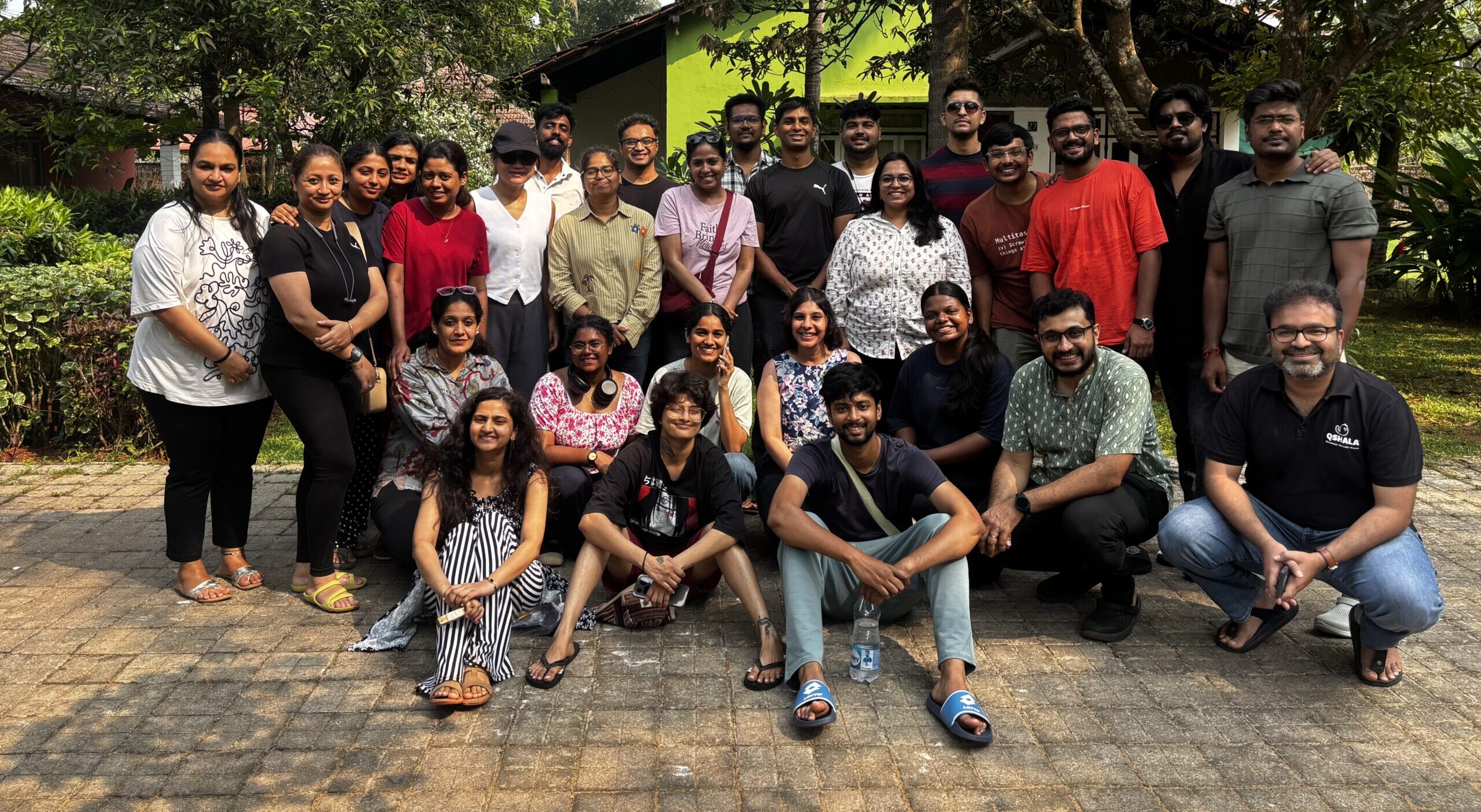
The QShala team aka the "Qurosity Catalysts"

Raghav as a Quiz Master at a Zerodha Vasity Quiz
THE PEOPLE WHO PLAY
Have you ever met a lawyer who was spectacularly bad at general knowledge but absolutely convinced of their brilliance?
Sachin: Not in my experience. The lawyers we’ve met through quizzes have been quite self-effacing. I’m afraid we can’t supply a suitably scandalous example. I suppose lawyers in the quizzing arena find that the challenge is vastly different from being questioned in court. Most come open minded and willing to learn.
Raghav: Most good lawyers I’ve met are curious and well read. And I suppose that’s one common demand of both the lawyer and the quizzer/quiz master’s profession. So, in all honesty, no names to offer!
Why do lawyers get so competitive about something that won’t appear on their annual appraisal?
Sachin: Perhaps because precision matters so much in their work. A nearly correct answer being accepted can be particularly irritating. But I wouldn’t single out lawyers: people get competitive, and we all love to be right. And that competition, that energy is what I love about quizzes. People lose themselves in the task at hand and usually return to normal once the quiz ends.
Raghav: It’s in our training! But when a quiz is conducted well, it becomes our job as quizmasters to remind everyone that we’re here for fun and learning. If it starts feeling like a matter of life and death, I usually prescribe a chill pill.
What’s the most entertaining meltdown you’ve witnessed during a quiz?
Raghav: Mine is a meltdown of the happy kind. At a government-school quiz supported by Agastya Foundation and Texas Instruments, three girls from a school near Kanakapura got the final question right and won. They burst into tears, and quite a few of us in the auditorium joined them. Years later, I learnt that they had used the prize money towards their college fees. That stays with you.
CURIOSITY AND THE BUSINESS OF LEARNING
When did quizzing stop being about knowing obscure facts and become something bigger for you?
Sachin: Very early in our school sessions. We’d share something interesting, and children wouldn’t just hear it and move on. They’d build on it. They’d respond with their own stories and questions. It’s indescribable, you could see curiosity build in the room. That moment we become stronger with our conviction that what we were doing mattered. That it wasn’t just competition and knowing things; it was sparking curiosity.
Raghav: Quizzing has given both of us so much; a sense of self, a perspective on the world around us. And we wanted to make that experience available to others. I believe curiosity helps people think critically and make better decisions. My life is a testament to that. A quiz can be a small but meaningful way of encouraging that habit throughout life.
Is curiosity something we’re born with, or does adulthood slowly beat it out of us?
Raghav: I don’t know how much we’re born with, but upbringing makes all the difference: being encouraged to read, question and try different things. Adulthood can crowd those habits out. Caught up in the rigamarole of daily life, I confess that I don’t feel as sharp a quizzer as I did in college. Curiosity needs exercise too, and mine could probably do with a more regular workout.
What’s one thing you wish every child learnt that no school report card would ever measure?
Sachin: The courage to ask a question, especially when nobody else will. We reward children for knowing answers; I’d love us to notice what they’re asking. Even the question that inconveniences the classroom may show that someone is genuinely trying to understand.
Raghav: Self-reflection: Learning to observe yourself and question what you think you know. Knowing the name of a concept isn’t the same as understanding it. I’d love children to grow up recognizing that difference, about themselves as much as the world.
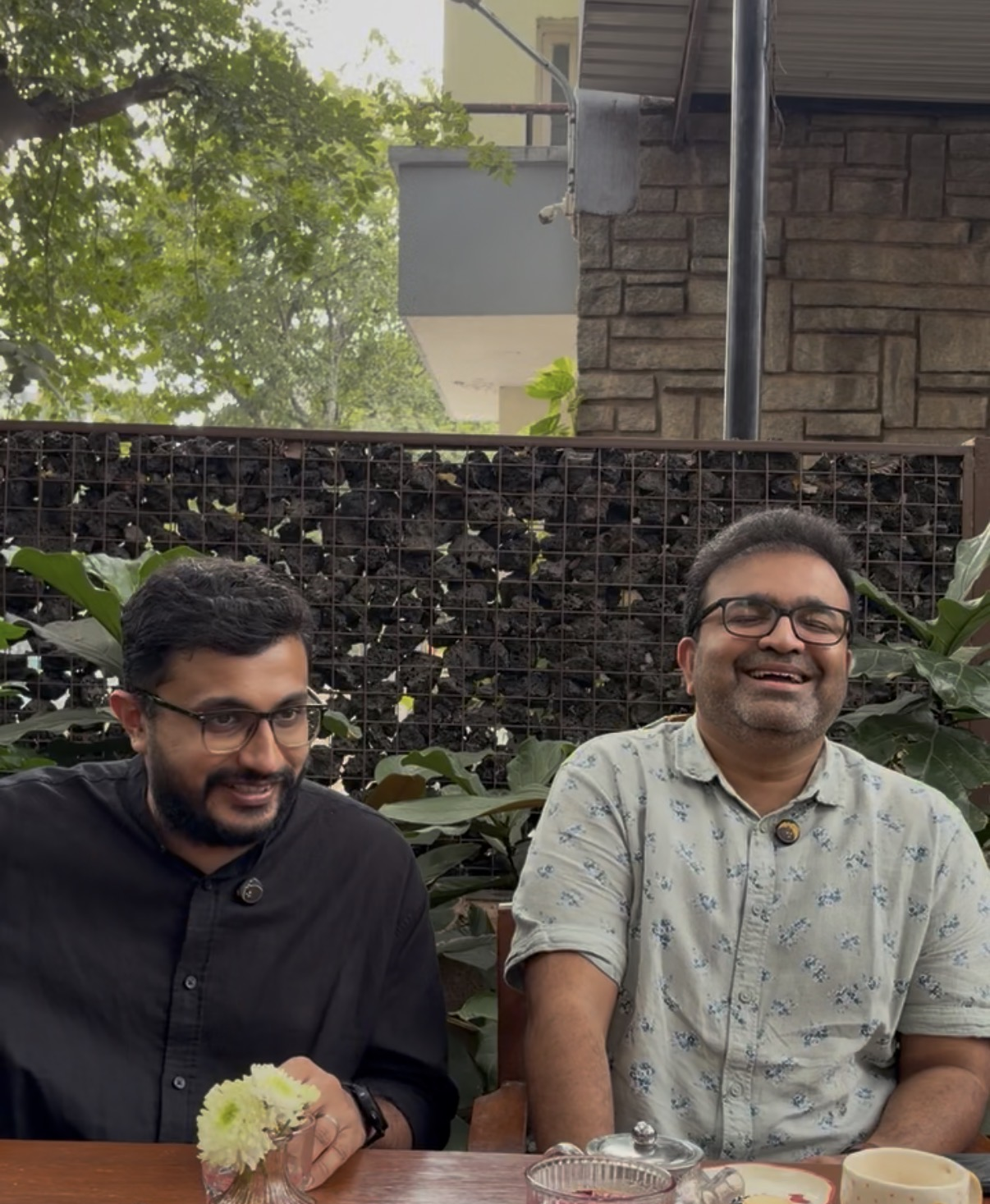
"A good day of work for us at QShala is when we leave the world a little kinder and little more curious - one question at a time" - Raghav & Sachin
QUIZZING RAGHAV AND SACHIN
What’s the most useless piece of information lodged permanently in your brain?
- Raghav: A unit used to measure computer-mouse movement is called a “mickey”. Apparently, even my useless information has a mouse connection.
- Sachin: “Muscle” comes from a word that means “little mouse”. We seem to have arrived at a rodent-themed answer round.
If you were to take a quiz on your own lives, what would be the one question you’d both get wrong with?
- Sachin: “How much prize money have you won in total?” No idea.
- Raghav: Agree with Sachin on that.
Which one of you is more unbearable when you win?
- Sachin: I’m more unbearable when I lose. I don’t particularly enjoy it.
- Raghav: I think we’re both reasonably bearable when we win. And I am a little more sanguine when I lose.
If your former law school classmates had to describe your career trajectory in one word, what would it be?
- Sachin: Best to ask them. I wouldn’t want to assume. Hopefully a good word though. Haha.
- Raghav: Perhaps “passion”? I’d like to think they see two friends doing something they love. But they should get the final word